Sewer Pipe Lining vs Pipe Bursting
Sewer pipe lining rebuilds your existing pipe from the inside; pipe bursting destroys it and pulls a new HDPE line through. Here's how to choose in Florida.
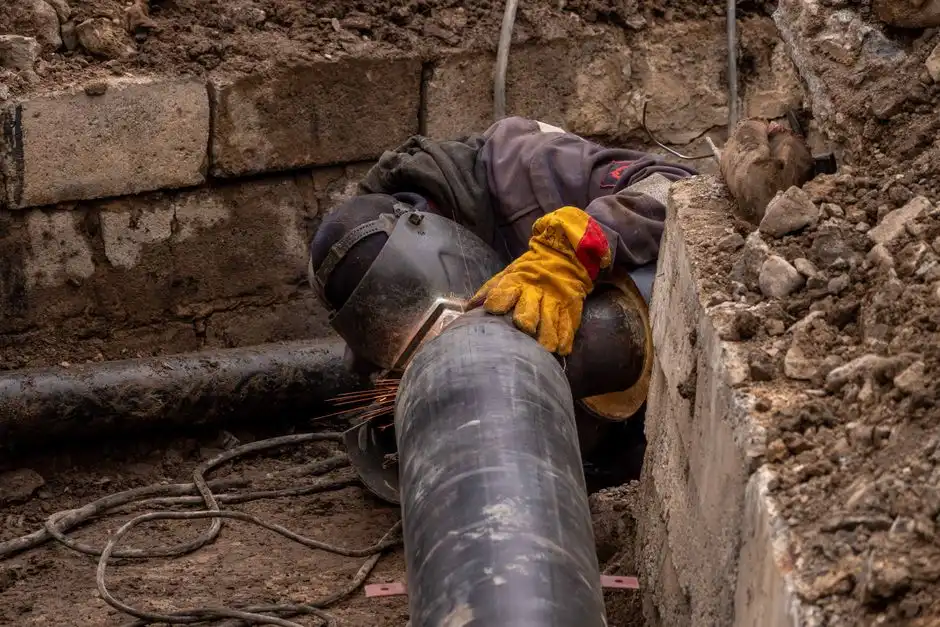
Sewer pipe lining rebuilds your existing pipe from the inside with a resin-saturated liner, while pipe bursting destroys the old pipe and pulls a brand-new HDPE line through the same trench path. Lining costs roughly $80 to $150 per linear foot in 2026 and keeps your current pipe diameter; pipe bursting runs $60 to $200 per linear foot and lets you upsize. If your pipe is cracked but structurally intact, lining wins. If it's collapsed, badly offset, or undersized, bursting is the honest answer.
We run both methods across Florida, and the choice almost never comes down to price alone. It comes down to pipe condition, diameter, root load, and what's sitting on top of the line. Here's how we walk homeowners through the decision.
What Is the Difference Between Sewer Pipe Lining and Pipe Bursting?
Sewer pipe lining vs pipe bursting in Florida is a comparison between two trenchless methods that solve different problems. Lining is a rehabilitation method - it coats and seals the inside of a pipe that still has its shape. Pipe bursting is a replacement method - it removes the old pipe entirely and installs new pipe in its place.
Lining, also called CIPP (cured-in-place pipe), uses a felt or fiber tube soaked in epoxy or polyester resin. We pull it into the host pipe, inflate it, and cure it with heat or UV light. The result is a smooth, jointless interior wall about 3 to 6 millimeters thick.
Pipe bursting uses a conical bursting head pulled through the old pipe by a hydraulic winch or static puller. The head fractures the old cast iron, clay, or PVC outward into the surrounding soil while a new HDPE pipe is dragged in behind it. Same path, new pipe, no trench along the run.
Both are considered trenchless sewer repair, and both avoid the yard-destroying open cut that traditional replacement requires. The difference is whether you keep the old pipe or replace it.
How CIPP Sewer Pipe Lining Works in Florida
CIPP sewer lining in Florida starts with a camera inspection and a thorough cleaning of the host pipe. We hydro-jet the line to remove grease, scale, and root mass, then run a camera back through to confirm the pipe is clean enough for the resin to bond.
From there the process is straightforward:
- We measure the run and cut the liner to length.
- The liner is saturated with resin and pulled or inverted into the pipe.
- We inflate a calibration tube to press the liner against the pipe wall.
- Heat or UV light cures the resin - typically 2 to 6 hours depending on thickness and length.
- We cut the ends, re-open any lateral connections with a robotic cutter, and camera the finished line.
Most residential lining jobs are done in a single day. You can usually use your plumbing again the same evening. The finished liner carries a 50-year design life when it's installed correctly, and it handles the hydrogen sulfide and shifting soil we deal with from Miami to Pensacola.
One thing to know: lining reduces your inside diameter slightly. On a 4-inch line that's usually a non-issue. On a line that's already undersized or has heavy slope problems, it can matter.
How Pipe Bursting Works in Florida
Pipe bursting in Florida replaces the pipe instead of coating it, and it's the method we reach for when the old line is beyond saving. We dig two small access pits - one at each end of the run - and thread the bursting head and new HDPE pipe through.
The bursting head is pulled through the old pipe, fracturing it outward. The new HDPE pipe follows immediately behind. Because HDPE is flexible, it can be pulled through long runs and around gentle bends without joints.
- Best for: collapsed clay tile, heavily root-invaded lines, offset joints, and pipes you want to upsize from 4-inch to 6-inch.
- Typical run length: 50 to 300 feet per pull, sometimes more with the right equipment.
- Downtime: one to two days for most residential jobs.
- Lifespan: 50 to 100 years for HDPE, with no joints to fail.
The trade-off is that pipe bursting requires more access than lining. You need pits at both ends, and the bursting head needs room to expand the soil. In tight urban lots - think older Miami or St. Petersburg neighborhoods with mature trees and narrow side yards - that access can be the deciding factor.
Which Is Cheaper: Sewer Pipe Lining or Pipe Bursting in Florida?
Sewer pipe lining vs pipe bursting cost in Florida breaks down like this for 2026: lining runs $80 to $150 per linear foot, and pipe bursting runs $60 to $200 per linear foot. The overlap is real, and the cheaper option depends entirely on your specific line.
A 60-foot 4-inch line that just needs sealing might cost $5,500 to $8,000 to line. The same line, if it's collapsed and needs bursting plus two access pits, could run $9,000 to $14,000. But a short 30-foot burst with easy access can come in under a comparable lining quote.
What drives the number up on either method:
- Depth of the line - deeper pipes mean more excavation for access pits.
- Access - landscaping, driveways, pool decks, and mature root systems all add cost.
- Line length and diameter - bigger pipe, more material.
- Point repairs - if we find a broken section mid-run, that's extra.
We give you the price before we start, and we don't add line items after the fact. If a camera inspection shows the line is a better fit for one method than the other, we tell you that up front.
Which Lasts Longer: Sewer Pipe Lining or Pipe Bursting?
Pipe bursting wins on lifespan because you're getting an entirely new pipe. HDPE has a 50-to-100-year service life, and because it's jointless, there's nothing for roots to exploit.
CIPP lining carries a 50-year design life when it's installed to spec. That's not marketing - it's the tested standard for properly cured epoxy liners. The catch is that the liner is only as good as the host pipe around it. If the old pipe continues to shift and crack, the liner can eventually crack with it.
In Florida, both methods face the same enemies: shifting soil, high water tables, and tree roots. Lining handles roots by sealing them out. Bursting handles them by removing the pipe they were feeding on. For a line with heavy root intrusion, bursting is the more permanent fix.
If you're weighing this on a 40-year-old clay line under a mature oak, we'd lean bursting. On a 20-year-old PVC line with a few cracks, lining is the smarter spend.
Root Intrusion, Older Pipes, and Florida Soil
Sewer pipe lining vs pipe bursting for root intrusion in Florida is one of the clearest dividing lines between the two methods. Roots get into pipes through joints and cracks. Lining seals those entry points from the inside. Bursting eliminates the joints entirely.
If the roots have only found a few joints and the pipe is otherwise sound, we can cut the roots out with a rooter service, then line the pipe and seal those joints permanently. That's a one-day job and it solves the problem at the source.
If the roots have crushed the pipe or the line is more root mass than pipe, lining won't hold. You need to replace it, and bursting is the least invasive way to do that.
Older Florida homes - especially those built before 1980 - often have clay tile or cast iron laterals. Clay tile is brittle and shifts with our sandy soil. Cast iron scales and eventually rots through. Both are candidates for either method, but the condition of the pipe decides which one.
We see this constantly in older neighborhoods, and it's why we always start with a camera. You can't pick a method without seeing the pipe.
Can You Use Lining and Pipe Bursting Together?
Yes, and on longer or more complex runs we do it often. A common approach is to burst the worst section of the line - the collapsed or heavily root-damaged part - and line the sections that are still structurally sound.
This hybrid approach saves money on long runs where full replacement isn't necessary. It also lets us upsize a problem section while leaving the rest of the line alone.
Another combination: burst the main line, then line the lateral connections that branch off it. That way the whole system gets renewed without digging up the entire yard.
We decide this on a case-by-case basis after the camera inspection. There's no reason to replace a pipe that's still doing its job.
Common Mistakes We See on Trenchless Jobs
The biggest mistake is choosing a method before the pipe has been inspected. We've been called to "line" a pipe that was already collapsed. No liner will fix that, and the homeowner wasted a deposit with another contractor.
Other mistakes we see:
- Skipping the cleaning step. Lining over grease or scale means the resin never bonds. The liner delaminates within a year.
- Ignoring the laterals. If you line a main and don't reopen the branch connections, you've just sealed off half the house.
- Choosing the cheapest quote. Trenchless work is equipment-heavy. A quote that's 40% below everyone else usually means corners get cut on cleaning, curing, or camera verification.
- Not checking the slope. If the line has a belly or a backfall, lining it just preserves the problem. You'll still get backups.
We camera every line before and after. If the finished work doesn't look right on camera, we don't call it done.
When to Call a Professional
Call us when you see repeat backups in the same fixture, sewage odors in the yard, or slow drains throughout the house. Those are signs of a main line problem, not a clog you can snake away.
We handle sewer line inspection in Florida with camera equipment that shows us exactly what's happening underground. From there we can tell you whether lining, bursting, or a targeted repair is the right call - and what it will cost.
We also handle emergency sewer line repair in Florida when a line fails on a weekend or holiday. Sewage in the yard or backing up into the house is not a wait-until-Monday problem.
If you're in an older neighborhood with clay or cast iron laterals, it's worth having the line scoped before you have a problem. A $300 inspection now can save you a $12,000 replacement later.
Frequently Asked Questions
What is the difference between sewer pipe lining and pipe bursting in Florida?
Lining coats the inside of your existing pipe with a resin liner, keeping the old pipe in place. Pipe bursting fractures the old pipe and pulls a new HDPE pipe through the same path. Lining rehabilitates; bursting replaces.
Which is cheaper, sewer pipe lining or pipe bursting in Florida?
Lining typically runs $80 to $150 per linear foot in 2026, and pipe bursting runs $60 to $200 per linear foot. For short runs with easy access, bursting can be cheaper. For longer runs where the pipe is still sound, lining usually wins.
Which lasts longer, sewer pipe lining or pipe bursting?
Pipe bursting lasts longer because you get a brand-new HDPE pipe with a 50-to-100-year lifespan. CIPP lining carries a 50-year design life, but its longevity depends on the condition of the host pipe around it.
Can sewer pipe lining and pipe bursting be used together in Florida?
Yes. We often burst the worst section of a line and line the rest. This hybrid approach saves money on long runs and lets us upsize a problem section without replacing the entire line.
How do I know which method my sewer line needs?
You need a camera inspection first. The condition of the pipe - cracks, offsets, root intrusion, collapse - determines the method. We scope every line before recommending anything.
Get Help With sewerlinerepairfl in Florida
If your sewer line is backing up, smelling, or just old enough to worry you, we'll camera it and tell you straight what it needs. No pressure, no upsell - just the right fix for your line.
Call Florida Sewer Line Experts at +1 800-333-3693 to schedule your inspection.